|
CREDENTIALS
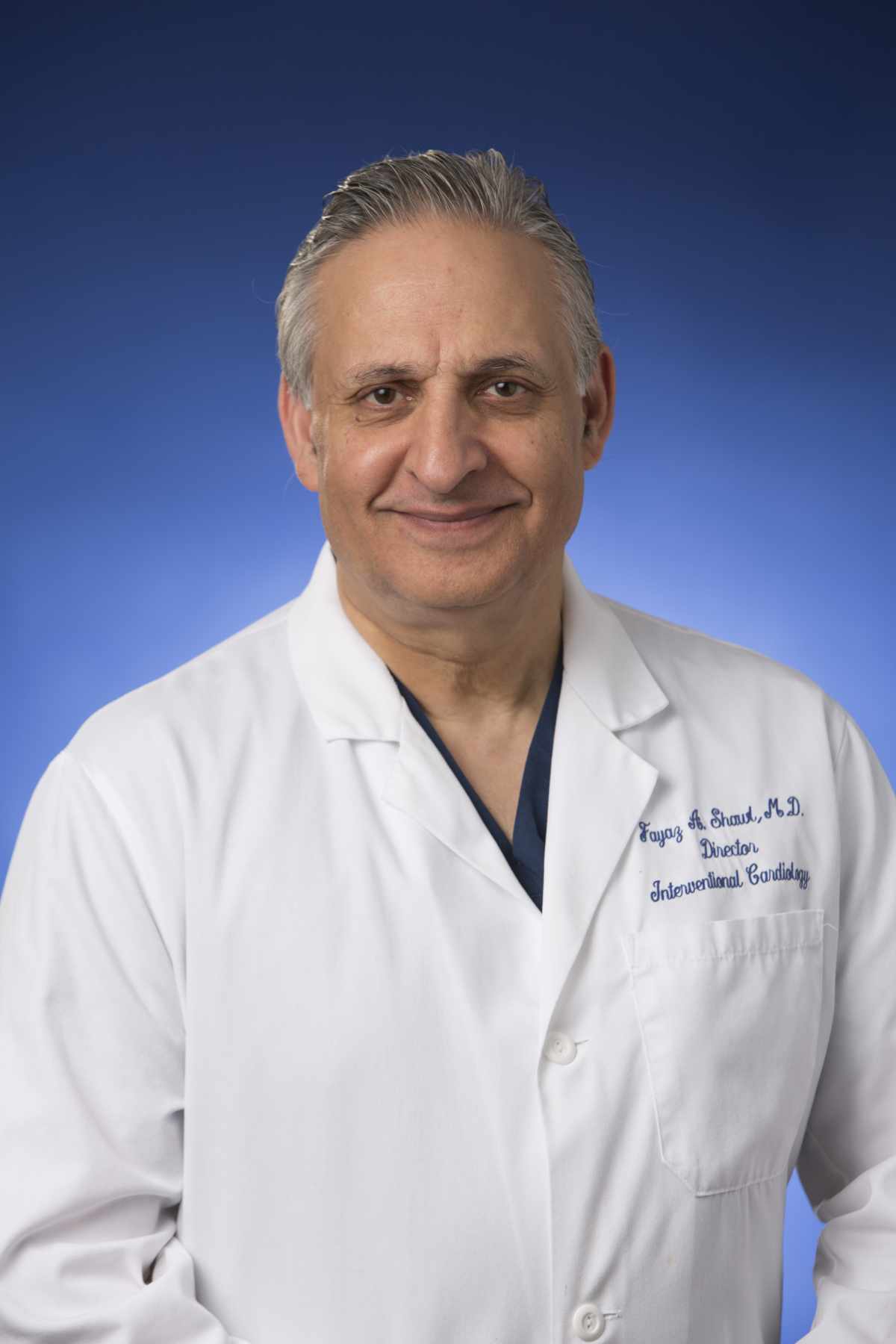
Fayaz Shawl, MD, FACP, FCCP, FACC, FSCAI
Dr. Shawl is currently the Director of Interventional Cardiology at Adventist HealthCare White Oak Medical Center in Silver Spring, Maryland, as well as Clinical Professor of Medicine at George Washington University School of Medicine in Washington, D.C., USA.
Dr. Shawl received his medical degree from Kashmir Medical College in 1972 and completed his residency in England.
In 1977, Dr. Shawl moved to the United States and completed his cardiology fellowship at The Walter Reed Army Medical Center. Dr. (Maj.) Shawl brought the military into the balloon age when he performed the first PTCA in the United States Military (Army, Navy, Air Force) at Walter Reed Army Medical Center in 1980. Between 1979 and 2003, Dr. Shawl retained clinical appointments at Georgetown University School of Medicine, George Washington University School of Medicine and the Uniformed Services University School of Medicine, while developing leadership roles in Interventional Cardiology at both Washington Adventist Hospital and George Washington University Hospital.
He is a Fellow of the American College of Cardiology, the American College of Chest Physicians, American College of Physicians, the American College of Angiology and The Society for Cardiac Angiography and Interventions.
Dr. Shawl has played an active role in all aspects of Interventional Cardiology ever since he performed the first PTCA at Walter Reed Army Medical Center in 1981. While he has lectured widely on every topic of Interventional Cardiology, he has been a leading proponent and innovator in the development of the percutaneous approach (known as Shawl Technique) to cardiopulmonary bypass support in "High Risk Angioplasty and Cardiac Arrest" performing the first percutaneous bypass-supported coronary intervention in the world in 1988. This technology is truly a lifesaver and when available in the Cardiac Catheterization Laboratory, complications leading to death would be impossible. Since its invention in 1988, there has not been a single death in the Cardiac Catheterization Laboratory at Washington Adventist while Dr. Shawl performed coronary interventions. He has lectured on this topic and trained physicians throughout the world. In a study involving 23,472 patients undergoing elective coronary interventions at Washington Adventist Hospital using percutaneous CPS standby rather than formal surgical backup for elective coronary interventions, resulted in NO deaths during the procedure. However, 39 patients (0.2%) did develop refractory hemodynamic collapse (imminent death) during which emergency CPS was instituted within 12 minutes. Of these 39 patients, 31 patients were discharged from the hospital (Shawl, et al. JACC 2001; 37(2A), 175A).
He has been teaching through live demonstrations other techniques of interventional cardiology (including coronary, carotid and other peripheral and non-cardiac interventions like valvuloplasty, ablative technique for IHSS, etc.) at Washington Adventist Hospital from 1987 - 1998 as well as in other parts of the world. Such types of teaching seminars are done through satellite or local broadcast live from the CATH lab.
A true innovator in working with the high risk patient, Dr. Shawl was the first Interventional Cardiologist to use both the Eclipse Holmium Laser as well as the AngioTrax mechanical device (1999) for Percutaneous Transluminal Myocardial Revascularization in the investigational treatment of end-stage atherosclerotic heart disease (patients with no options). He did both procedures as part of research first in world at New Delhi, India. He was also first to perform mitral valvuloplasty in the Washington, DC metropolitan area in 1985.
Dr. Shawl is a member of the renowned International Gruentzig Society and was recognized as one of the world's most talented interventionists in an interview for the Journal of Invasive Cardiology in April 2001 (JIC, Vol. 13, No. 4, April 2001). He was acknowledged to have performed the most interventional procedures as a single operator (over 19,000) in 2001.
Currently in pursuit of stroke prevention, the number two cause of death, Dr. Shawl and others have pioneered the technique of carotid artery stenting. He performed the first percutaneous carotid artery stenting in this region in 1995. The results of this new avenue of endovascular therapy may challenge the accepted practice of surgical carotid endarterectomy. Having done over 1000 carotid stent cases at Washington Adventist Hospital, using present technique, what he calls "meticulous technique" has resulted in a complication rate of <0.5% in the last 500 cases.
Dr. Shawl has a very active, accredited interventional fellowship program at Adventist
HealthCare Medical Center in association with the program at George Washington University Hospital in Washington, D.C...
Dr. Shawl has authored over 150 leading articles, abstracts, editorials and book chapters. He has also published a book entitled "Supported Complex and High Risk Coronary Angioplasty". Some of his more recent awards include the dedication of the Fayaz Shawl Advanced Interventional Catheterization Laboratory at Washington Adventist Hospital in 1998, 2002 Innovators Award from the Alliance of Cardiovascular Professionals, as well as several recognition awards from the Maryland State Senate and the United States House of Representatives. Dr. Shawl received nomination as International Health Professional of the Year (2003). This prestigious award is given to individuals whose achievements and leadership stand out in the International Community as decreed by the Research and Advisory Board sitting at the International Biographical Center in Cambridge, England. Dr. Shawl is also the only physician to be interviewed by Insight on the News Magazine, click here to read the article.
Dr. Shawl wants now to share his experience in the interventional treatment of cardiovascular diseases to an even broader population of physicians and patients who may not now have access to such techniques or facilities. This aspiration was the genesis for the establishment of The Dr. Fayaz Shawl Philanthropic Foundation, Inc., which plans to create cardiac specialty hospitals wherever deemed essential to treat the indigenous that are impoverished and cannot afford the cost of such medical attention.
|